
Natural Sciences and their Technologies Question
Metabolismo de procariontes
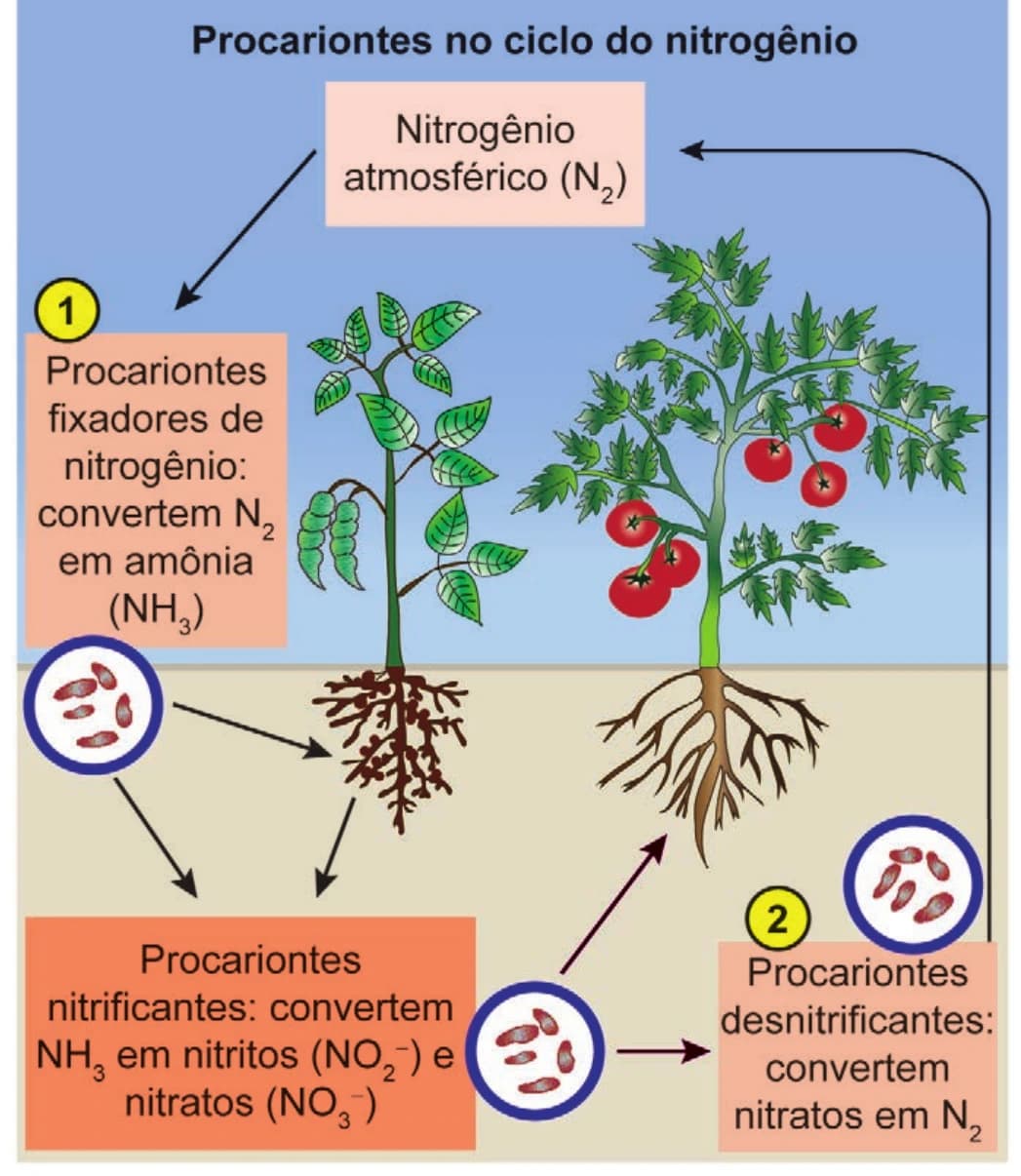
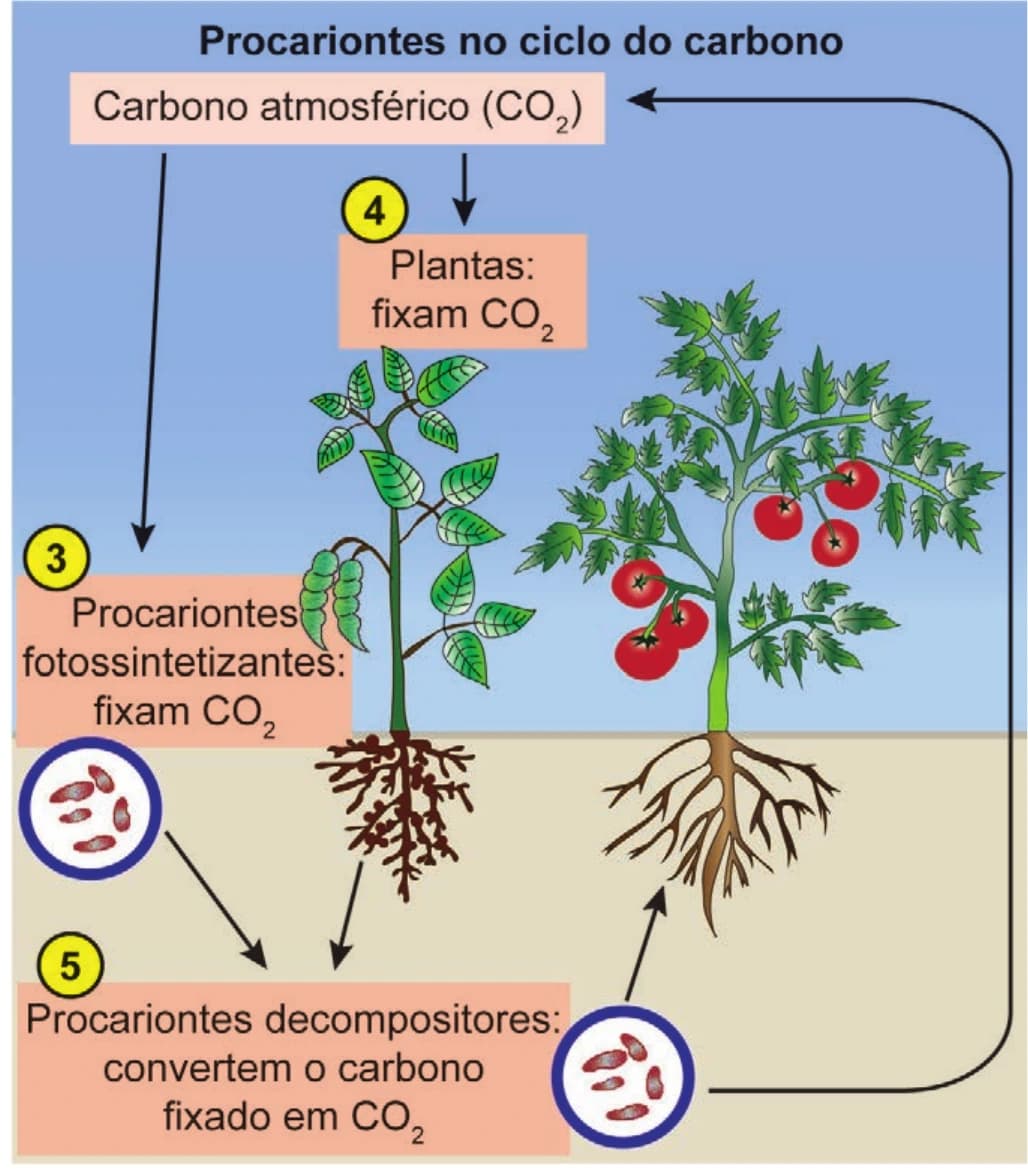
O esquema representa a ação de organismos no ciclo do nitrogênio e no ciclo do carbono. Os números correspondem a algumas etapas dos dois ciclos distintos.
In which numbered step does a redox transformation occur, similar to that which occurs in nitrifying prokaryotes?
1
2
3
4
5
Resolution & Explanations
Analysis of Prokaryotic Metabolism and Redox
The correct answer is option E) 5.
1. The Reference Reaction: Nitrification
The question asks to find a redox transformation analogous to the one that occurs in nitrifying prokaryotesLet's first analyze this reference reaction:
- Process: Nitrifying prokaryotes convert ammonia (NH₃) into nitrites (NO₂⁻) and subsequently into nitrates (NO₃⁻). * Redox Analysis: To understand the transformation, we look at the oxidation number (Nox) of nitrogen: * In NH₃ (ammonia), the oxidation number of nitrogen is -3. * In NO₃⁻ (nitrate), the oxidation number of nitrogen is +5. * Conclusion: Nitrification is a process of OXIDATIONThis is because the oxidation number of nitrogen increases (it loses electrons). This oxidation of an inorganic compound releases energy, which is used by these organisms (chemosynthesis).
Therefore, we are looking for another numbered step that also represents a process of oxidation.
2. Analysis of the Numbered Steps
-
A) Stage 1 (Nitrogen Fixation): * Process: N₂ → NH₃ * Redox Analysis: The oxidation number of N is... 0 (in N₂) to -3 (in NH₃). * Type: REDUCTION.
-
B) Stage 2 (Denitrification): * Process: NO₃⁻ → N₂ * Redox Analysis: The oxidation number of N is... +5 (in NO₃⁻) to 0 (in N₂). * Type: REDUCTION.
-
C) Stage 3 (CO₂ Fixation by Prokaryotes): * Process: CO₂ → Carbon fixed (organic matter, e.g., C₆H₁₂O₆). * Redox Analysis: The oxidation number of C ranges from +4 (in CO₂) to 0 (in glucose). * Type: REDUCTIONThis is the central process of photosynthesis.
-
D) Stage 4 (CO₂ Fixation by Plants): * Process: CO₂ → Carbon fixed (organic matter). * Redox Analysis: It's the same process as in step 3. The oxidation number of C goes from... +4 to 0. * Type: REDUCTION.
-
E) Step 5 (Decomposition): * Process: Carbon fixed (organic matter) → CO₂. This is the process of cellular respiration or decomposition. * Redox Analysis: The oxidation number of C ranges from 0 (in organic matter) for +4 (in CO₂). * Type: OXIDATION.
3. Conclusion
Nitrification is a process of oxidation of a nitrogen compound. Step 5, which represents decomposition (cellular respiration), is a process of oxidation of a carbon compound. Both are fundamental oxidation reactions in their respective biogeochemical cycles. Therefore, step 5 is the one that presents a redox transformation analogous to that of nitrifying prokaryotes.