BiologyMediumSingle Choice

Biology Question

Statement
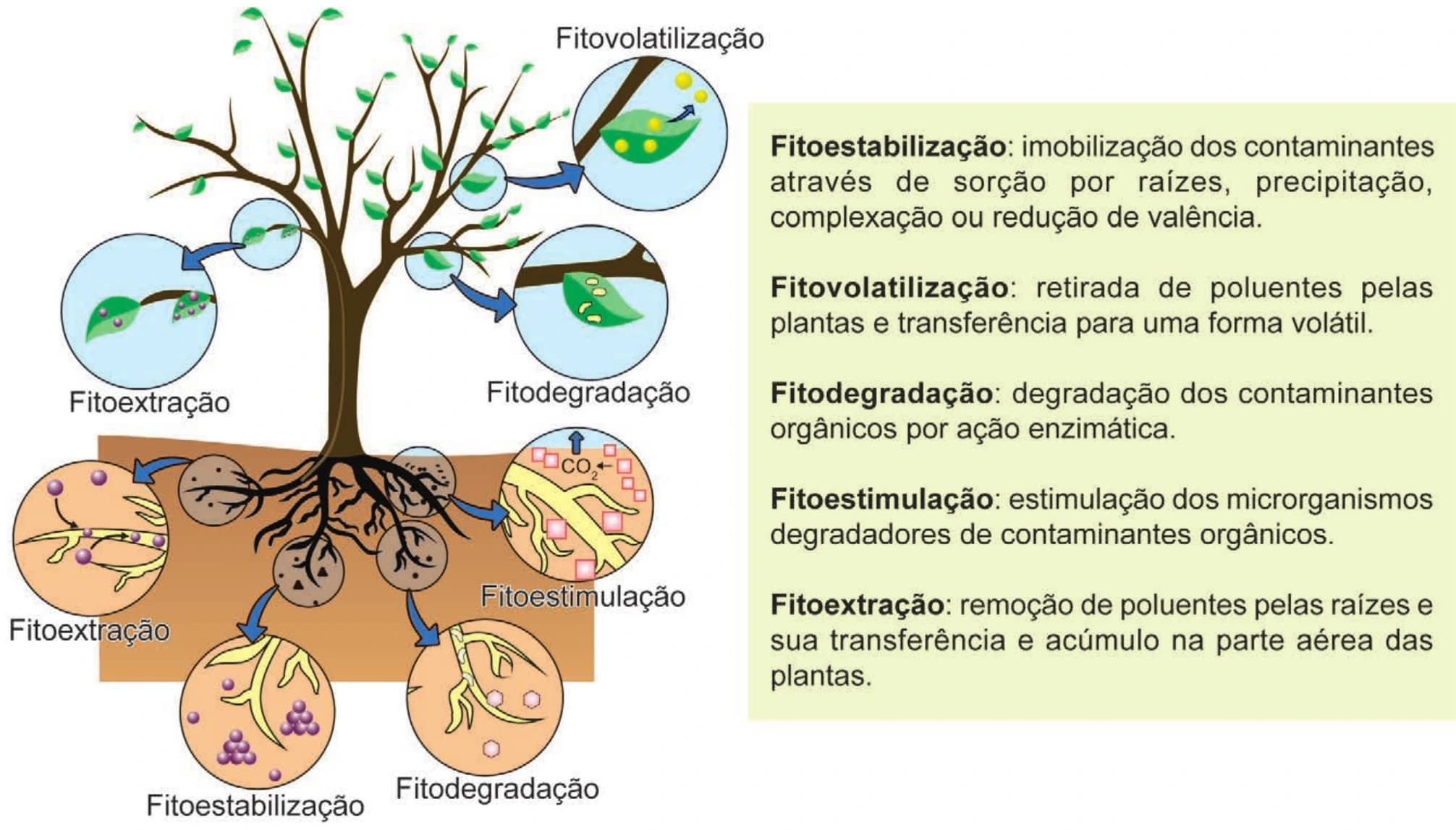
The method that removes mercury from a contaminated site, preventing it from entering the food chain, is

Diagrama de uma planta ilustrando mecanismos de fitorremediação nas folhas e nas raízes, acompanhado de um quadro explicativo à direita com definições: Fitoestabilização (imobilização dos contaminantes através de sorção por raízes, precipitação, complexação ou redução de valência); Fitovolatilização (retirada de poluentes pelas plantas e transferência para uma forma volátil); Fitodegradação (degradação dos contaminantes orgânicos por ação enzimática); Fitoestimulação (estimulação dos microrganismos degradadores de contaminantes orgânicos); e Fitoextração (remoção de poluentes pelas raízes e sua transferência e acúmulo na parte aérea das plantas).
LUIZ, E. P. **Avaliação dos métodos de fitorremediação [...] na remoção de chumbo, cobre e zinco**. São Paulo: UFABC, 2016 (adaptado).

The method that removes mercury from a contaminated site, preventing it from entering the food chain, is

#Phytoremediation#Bioremediation#Heavy metal pollution#Bioaccumulation and biomagnification
A

phytostabilization, with the mercury remaining available on the surface of the plant roots.

B

phytovolatilization, allowing the uptake of mercury by plants and its transfer into a volatile form.

C

phytodegradation, involving the degradation of mercury mediated by enzymes in the roots to form less toxic species.

D

phytostimulation, involving the removal of mercury through the action of root microorganisms that absorb and immobilize the metal.

E

phytoextraction, where plants that accumulate mercury are grown on these sites, and the metal-rich biomass is removed after growth.

Correct

Community Explanations

There are no community explanations for this question yet.